I have turned up some physically slight but remarkable new material offering a further insight into Turing’s state of mind around the time of his trial for gross indecency. They don’t revolutionise the historical understanding, which remains largely as it was when Andrew Hodges first documented the available witness evidence back in the 1980s. But these letters do deepen that understanding and I found it particularly poignant to read Turing’s first-hands words afresh.
The typed fragment was prepared by Turing (the typewriting is distinctive!) in advance of his appearance at Knutsford Crown Court on 31 March 1952 at which he had decided to plead guilty, and updated soon after to let his friend and mentor Philip Hall known about the sentence. It clears up one point, which is that the idea of putting Turing under a psychiatrist was explicitly to administer oestrogen therapy, and not a post-verdict decision by that psychiatrist. But the question of why Turing pled guilty is a larger historical point of some importance to Turing iconography. The policeman that interviewed him prior to his arrest remembered that he had admitted his guilt: we know that because Andrew Hodges tracked the policeman down to Anglesey in the 1970s and interviewed him. Even a quarter-century after the event, the officer had a clear recollection of an unusual man; it is from the same interview that the detail about Turing playing the violin (probably rather badly, as he was self-taught) to his police visitors emerges.
This admission, when Turing could have kept silent, has puzzled many people over the years. Andrew’s biography interpreted it as a clarity about the difference between moral guilt and legal guilt and a principled refusal to accept the former; I used to have more scepticism, imagining Turing as an naive innocent abroad. I also used to think it was unlikely there’d ever be more evidence one way or the other. I was wrong on both counts.
First, thanks to Dermot Turing’s efforts, there was the remarkable unredaction of the Alexander letter I wrote about last year. And secondly, thanks to the professionalism of the Cambridge University Library, a letter emerged which can also plausibly, if not definitively, support a view of Turing’s stance as one of moral clarity.
The letter makes clear for the first time that there was independent evidence from Arnold Murray’s burglar friend that the police could use to support a charge of gross indecency. If a solicitor had been present before Turing was first interviewed, they would surely have advised that this was just hearsay from a deeply discreditable witness and told Turing to go no comment. But there was no such solicitor present, and Turing’s reference to ‘playing my hand very badly’ likely refers to this. As to what the letter says about Turing’s political and moral clarity, I’ll leave for now to others. More details about the letter and a few notes below the transcript.
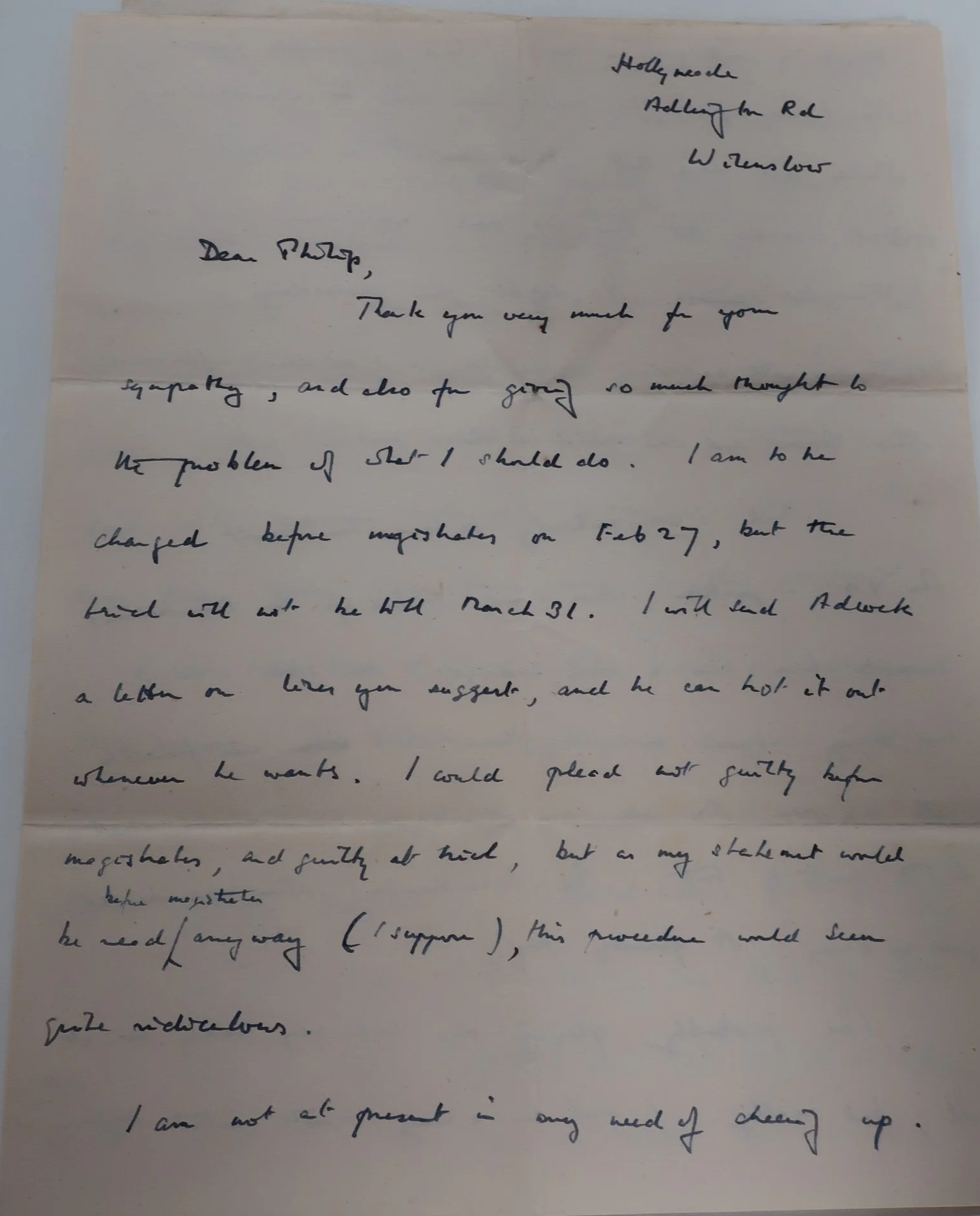
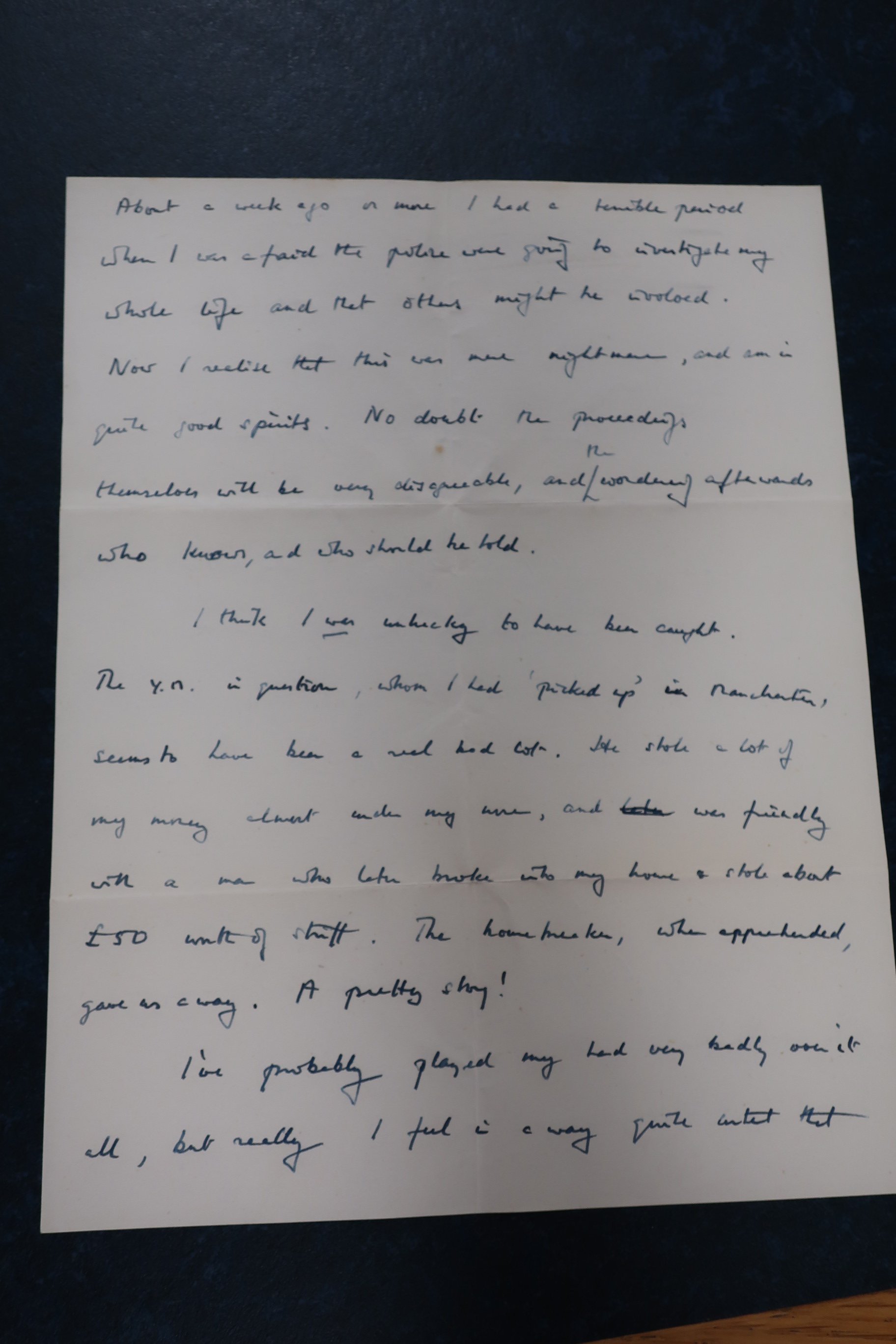
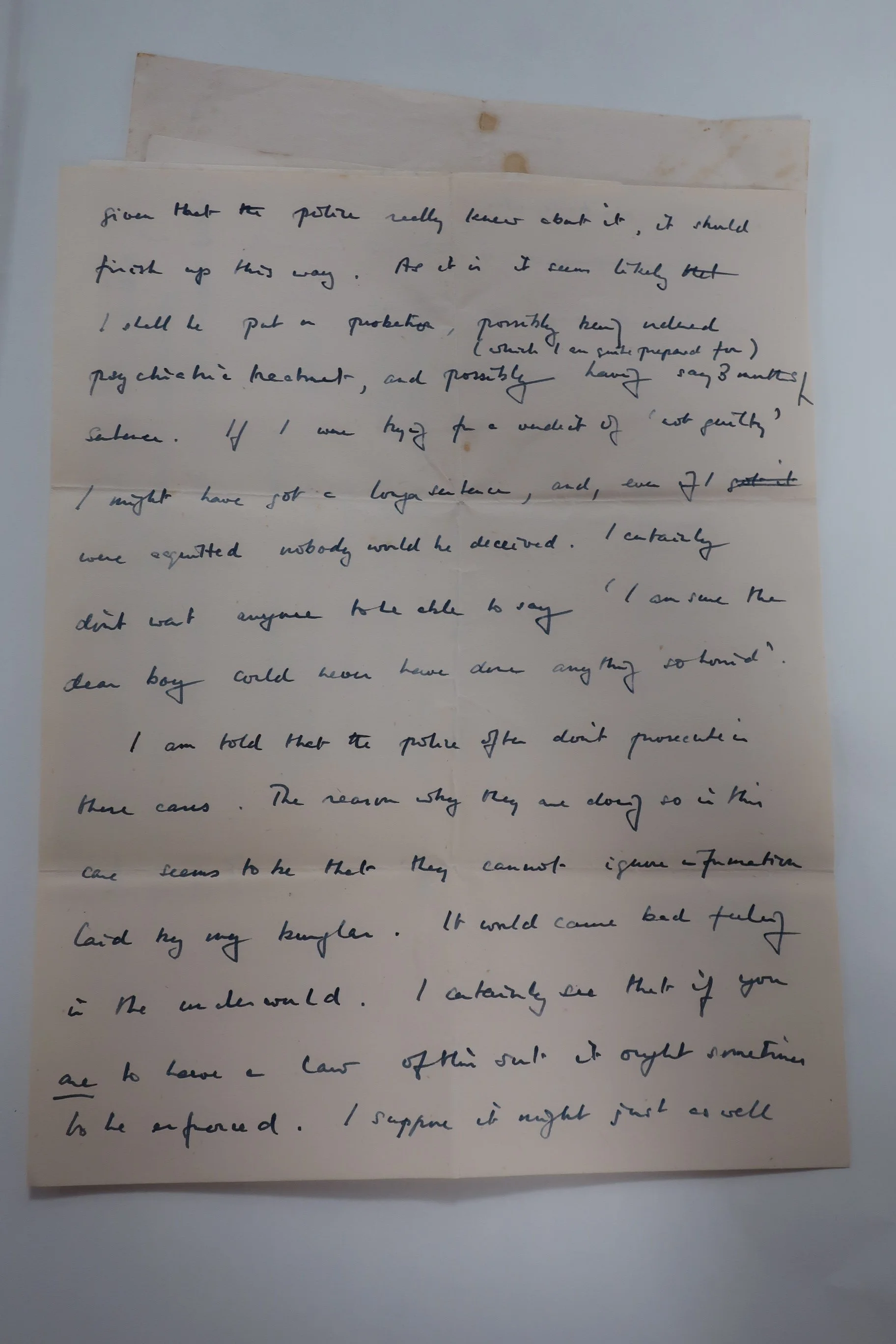
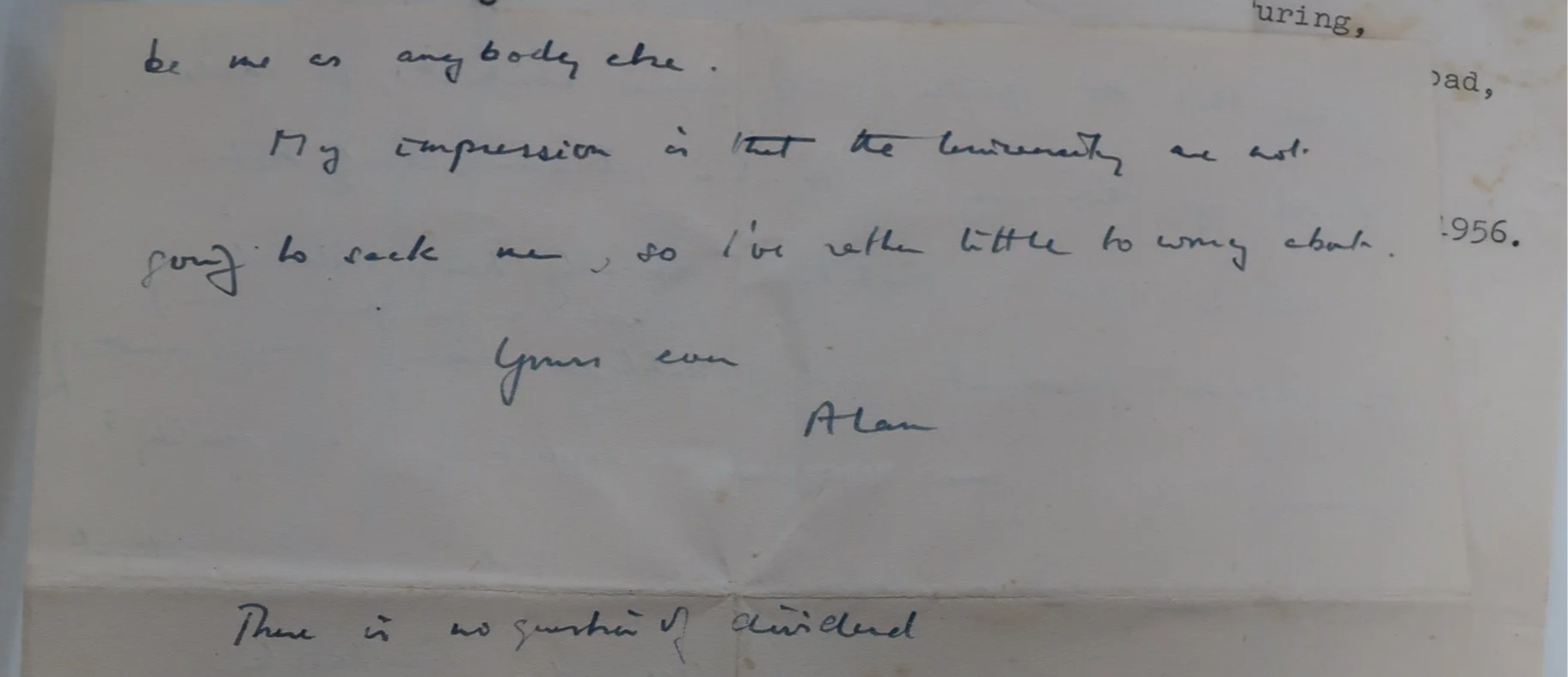
Dear PhilipThank you very much for your sympathy, and also for giving so much thought to the problem of what I should do. I am to be charged before magistrates on Feb 27, but the trial will not be until March 31. I will send Adcock a letter on lines you suggest, and he can hot it out whenever he wants. I could plead not guilty before magistrates, and guilty at trial, bur as my statement would be read before magistrates anyway (I suppose) this procedure would seem quite ridiculous.I am not at present in any need of cheering up. Almost a week ago or more I had a horrible period when I was afraid the police were going to invetigate my whole life and that others might be ivolved. Now I realise that this was all mere nightmare, and am in quite good spirits. No doubt the proceedings themselves will be very disagreeable and the wondering afterwards who knows and who should be told.I think I was unlucky to have been caught. The Y.B. in question, whom I had ‘picked up’ in Manchester, seems to have been a real bad lot. He stole a lot of my money almost under my nose, and was friendly with a man who later broke into my house & stole about £50 worth of stuff. The housebreaker, when apprehended, gave us away. A pretty story!I’ve probably played my hand very badly over it all, but really I feel in a way quite content that given that the police really knew about it, it should finssh up this way. As it is it seems likely that I shall be put on probation, possibly including psychiatric treatment, and possibly say 3 months sentence which I am quite prepared for. If I were trying for a verdict of ‘not guilty’ I mght have got a longer sentence, and, even if I were acquitted nobody would be deceived. I certainly didn’t want anyone to be able to say ‘I assume the dear boy could never have done anything so horrid’.I am told that the police often don’t prosecute in these cases. The reason why they are so doing in this case seems to be that they cannot ignore information laid by my burglar. It would cause bad feeling in the underworld. I certainly see that if you are to have a law of this sort it ought sometimes to be enforced. I suppose it might just as well be me as anybody else. My impression is that the University are not going to sack me, so I’ve rather little to worry about. Yours everAlanThere is no question of dividend.The letter came from the correspondence of Philip Hall, which were donated to the Cambridge University Library by his executor, Jim Roseblade around the 1980s.Through no fault of Roseblade or the UL, the material languished in London, was only very superficially catalogued, and not available to the public; it took the enterprise of the keeper of manuscripts Katrina Dean to physically rescue them and create a short catalogue entry on the UL’s archive catalogue. Cataloguing resource is expensive and in high demand in the UL, and because of data protection law has to be carried out before anyone else can see the material. I’m additionally grateful to Katrina for listening to my request of this researcher to prioritise the subsequent detailed work, and to the cataloguing professional Susan Gordon who is currently carrying it out and has been very helpful in keeping my updated on her progress. I wrote about some rather uninteresting earlier finds from the same material here.
This letter was not the first time Hall knew of Turing’s sexuality. Hall had only been made a Fellow of King’s a couple of years before Turing arrived as an undergraduate and stayed there his whole life apart from working at Bletchley Park. Its clear from this and other letters that the older man acted both as a formal teacher of mathematics, and later as a professional mentor and, most clearly here, advisor on being outed. Hall was once described to me as ‘obviously homosexual…but nobody ever discussed it’, and while he would for decades invite young King’s mathematics students for dinner and a theatre date in ways that might be read as longing-from-afar, there’s no evidence at all of any sexual approaches, wanted or unwanted. When Turing raised the spectre of the police investigating ‘others who had been involved’, those ‘others’ were Cambridge figures, and perhaps Bletchley Park ones, not the working class objects of his own attractions. While it’s unlikely that Turing or Hall had themselves been ‘involved’, those words could have carried real fear into the heart of King’s; rather notably it must have been Hall who tore out the name ‘Turing’ from the pre-typed report of the verdict.
The reference to ‘dividend’ refers to the £300 per year that Fellows of King’s received, independently of any teaching work; the reason that there was no question of it was that Turing’s Fellowship had recently elapsed. By tradition, an ex-Fellow was still able to enjoy the hospitality of the college, able to eat at High Table and so on, and there was a more sensitive issue about whether Turing would continue to be welcome to this. Adcock was vice-Provost and responsible for this hospitality; he too was an old Bletchley Park hand. It’s not clear what the reference to ‘he can hot it out’ refers to, but most likely to any objections within the College to the reappeearance of a sex offender. Nor do we have any record of what, if anything, Adcock replied.
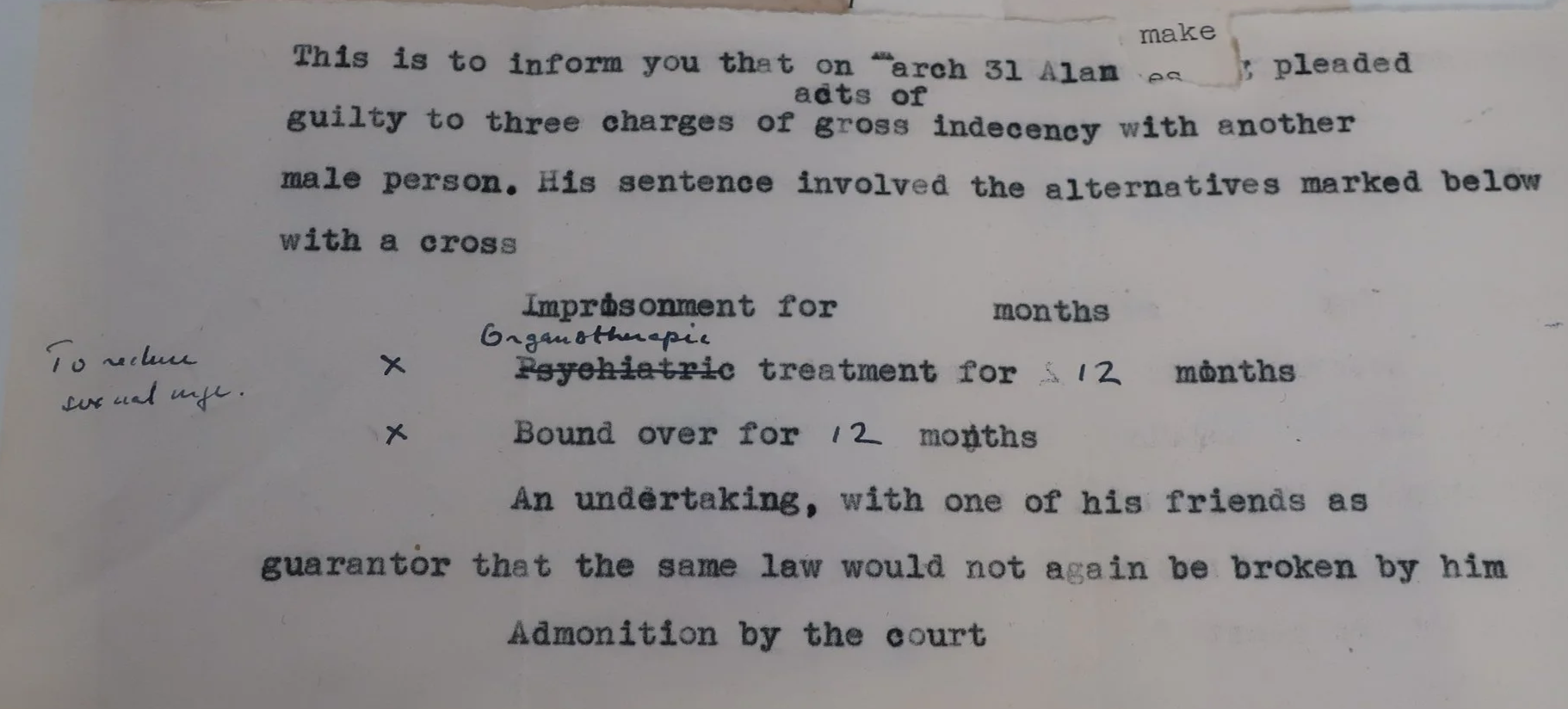
Letter from Alan Turing to Philip Hall, Cambridge University Library Hall Papers Add Ms.10311. Copyright by King’s College Cambridge and used by permission.